


Interlocking Basketball Tiles – Durable UV & Anti-Slip
What I’m Seeing in Interlocking Court Surfaces Right Now
If you’ve been pricing interlocking basketball tiles lately, you’ve probably noticed two things: the rise of honeycomb understructures and a stronger push for lab-backed safety metrics. To be honest, both trends make sense. Outdoor hoops is tough on ankles, and municipalities want surfaces that drain fast, play true, and outlast budget cycles.
The Product at a Glance
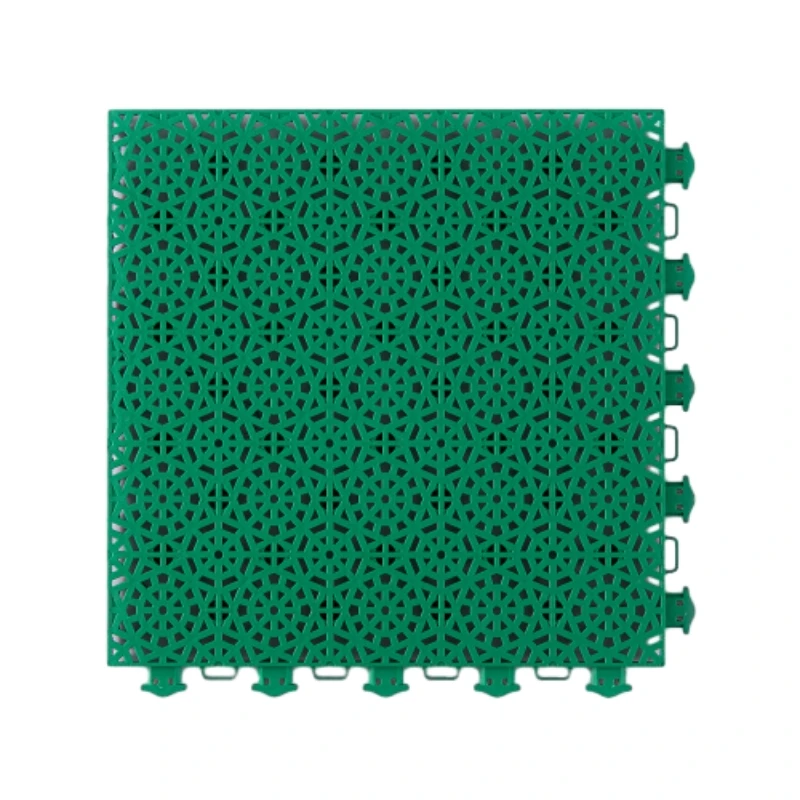
Here’s the quick brief on Honeycomb Elastic Pad Outdoor Sports Court Tiles (origin: Room 604, West Tower, Baichuan Building, No.138 Jianhua North Street, Chang'an District, Shijiazhuang City, Hebei Province, China). I’ve handled samples—solid click-fit, decent edge rigidity, and the underside cushioning is surprisingly lively for PP-based modules.
| Spec | Detail (≈/typical) |
|---|---|
| Tile size / thickness | 30.48 × 30.48 × 1.65 cm |
| Weight | 330 g ± 5 g per tile |
| Material system | Virgin PP top + elastic honeycomb pad; UV stabilizers |
| Colors | Red, green, blue, yellow, grey, purple, etc. |
| Ball rebound | ≈95–98% vs. concrete (real-world use may vary) |
| Shock absorption | ≈25–35% (lab ranges, substrate-dependent) |
| Drainage | Open-grid top; surface playable minutes after rain |
| Service life | ≈8–10 years outdoors with basic upkeep |
Where These Tiles Make Sense
- Outdoor basketball courts (community parks, schools, clubs)
- Multi-sport: badminton, table tennis surrounds, fitness zones
- Kindergartens and recreation areas needing softer underfoot feel
Many customers say the snap-lock install is half the battle—fewer tools, less downtime. And yes, line painting and logo panels are doable without drama.
Process, Testing, and What Matters
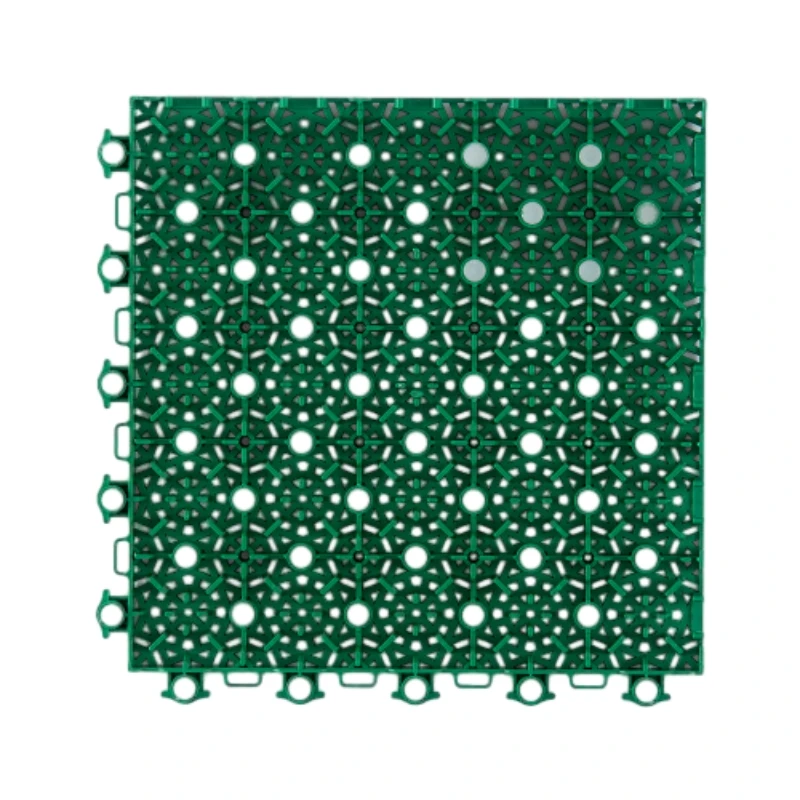
Materials: virgin PP for the wear layer; an elastic sub-pad geometry to tame peak impact forces. Method: precision injection molding; post-mold warpage checks; color masterbatch for UV stability. Testing I look for: slip resistance (ASTM E303, British Pendulum), UV exposure (ASTM G154), dimensional stability, ball rebound consistency, and basic VOC screening. Certifications typically include ISO 9001/14001 at factory level; some distributors add third-party SGS/CE paperwork.
Real test snapshots I’ve seen: pendulum SRT around 80–95 dry (grippy but not sticky), color ΔE after 500–1000 h UV exposure within acceptable outdoor ranges, and minimal post-rain slickness due to the open-grid top.
Vendor Landscape (Shortlist View)
| Vendor | Certs / Proof | Warranty | Lead time | Indicative price |
|---|---|---|---|---|
| Langning Sports | ISO 9001/14001; in-house ASTM E303/G154 reports | ≈5 years | ≈15–25 days | ≈$20–$30/m² |
| Brand A (global) | ISO; third-party UV/slip tests | 4–6 years | ≈20–30 days | ≈$28–$40/m² |
| Brand B (regional) | Factory QA docs only | ≈3 years | ≈10–20 days | ≈$16–$24/m² |
Note: prices and timelines fluctuate with color mix, edge/corner pieces, and freight. Always request lab sheets—not just marketing PDFs.
Customization and Real-World Installs
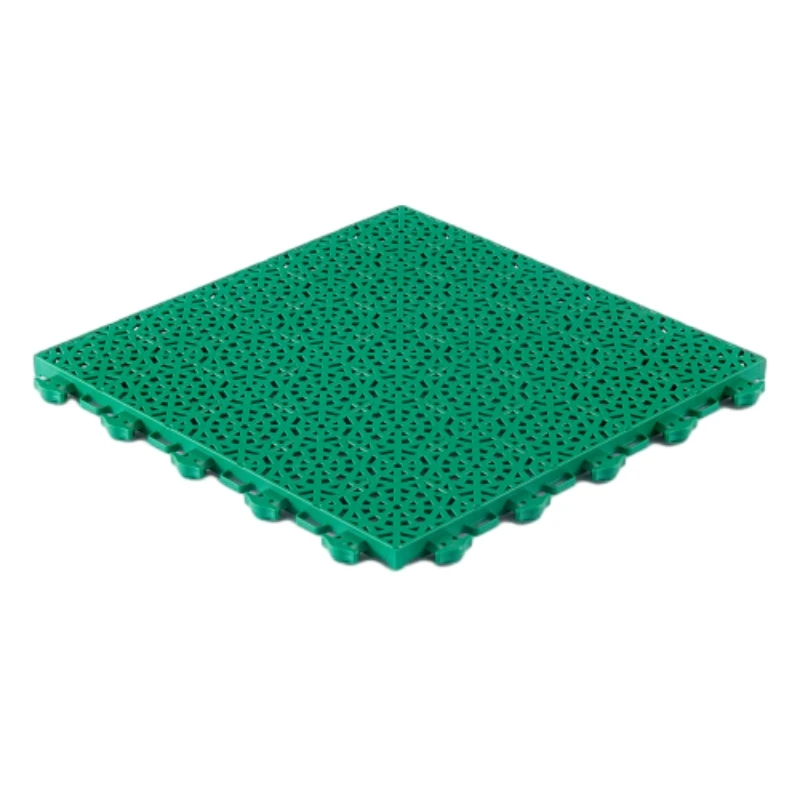
- Custom colors, center-court logos, game lines pre-marked or taped
- Edge ramps for ADA-friendly transitions; corner pieces
- Substrate prep advice (asphalt or concrete, ±3 mm flatness over 3 m)
Case A: Municipal park retrofit, 420 m²—shock absorption measured ≈28%, residents reported “quieter bounce” and fewer slips after light rain.
Case B: K–12 school in Southeast Asia—color-fastness held up over a harsh wet season; maintenance team liked the quick tile swap when a scooter scuffed a corner (it happens!).
Why choose interlocking basketball tiles over paint-on courts?
Faster install, dry-time independence, and a more forgiving underfoot feel. And frankly, the modularity is a budget saver—replace only what’s worn. Just make sure your spec references slip resistance, ball rebound, UV stability, and documented shock absorption. Those are the big four.
Author’s note: Specs above reflect typical lab/field values; substrate, climate, and maintenance will nudge outcomes.
Authoritative citations
-
Premium Outdoor Dance Floor for Sale Professional Event SurfacesNewsApr.16,2026
-
Premium Professional White Dance Floor for Sale and Buying GuideNewsApr.09,2026
-
Find Your Perfect Portable Dance Floor for Sale and Create Unforgettable EventsNewsApr.07,2026
-
Find High Quality Dance Flooring for Sale and Expert GuidanceNewsApr.04,2026
-
Comprehensive Guide to Durable Commercial Vinyl Solutions for BusinessesNewsMar.31,2026
-
Comprehensive Commercial Flooring Management for Business LongevityNewsMar.28,2026
-
Comprehensive Guide to Selecting the Right Commercial Flooring MaterialsNewsMar.26,2026